
Amazon Cargo Plane Crash in Miami Raises Questions About Approach Speed
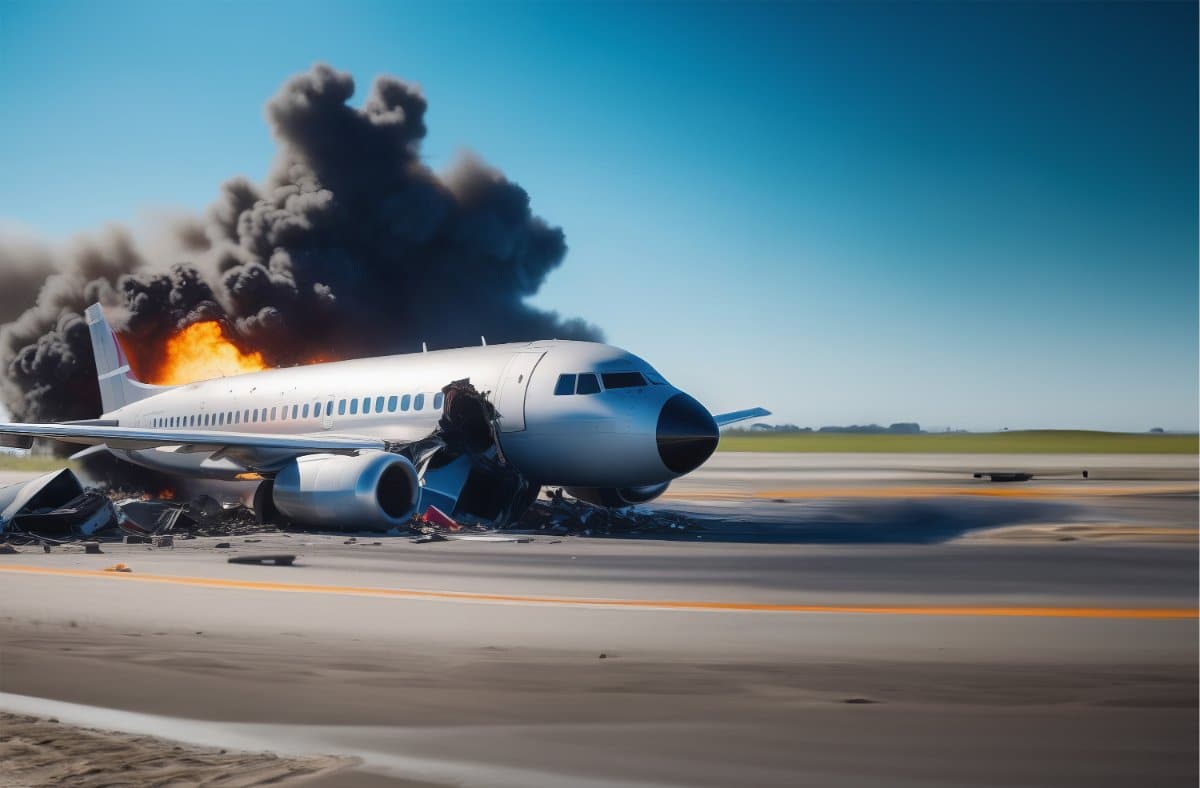 Five people were killed after an Amazon cargo plane overran a runway at Miami International Airport on September 6, 2026.
The Boeing 767, operated by 21 Air for Amazon, was arriving from San Juan, Puerto Rico, when it continued past the end of Runway 30. The plane traveled about 1,300 feet beyond the runway and struck vehicles both inside and outside the airport perimeter. Five people on the ground were killed, and five others were injured. The two pilots survived.
The National Transportation Safety Board (NTSB) is investigating the crash. Information released from the cockpit voice recorder and flight data recorder shows that one pilot repeatedly warned about the aircraft’s excessive speed during the final approach.
The NTSB has not yet determined what caused the crash.
What happened before the Amazon cargo plane crash?
According to the NTSB, the flight crew was cleared to land on Runway 30 about four minutes before the cockpit recording ended. The pilots began configuring the aircraft for landing, calling for flaps 5, lowering the landing gear and then calling for flaps 15.
About one minute and 42 seconds before the recording ended, a pilot called for flaps 20. The other pilot warned that the plane was too fast. That pilot continued making comments about the excessive speed for the rest of the recording. The NTSB noted there was not a consistent verbal response to those warnings.
As the plane got closer to the runway, automated “sink rate” and “too low terrain” warnings sounded. A pilot called for flaps 30 about 10 seconds before touchdown. The nose and right main landing gear touched down at a groundspeed of 158 knots. The left main landing gear did not touch down until about 11 seconds later, when the plane was traveling at 134 knots.
Did the pilots properly manage the aircraft’s speed?
Gold Standard Aviation in Opa-locka has raised concerns about how the aircraft’s speed and flight path were managed during the approach.
Based on its analysis of the preliminary flight data, the aircraft initially appeared to be on a stabilized approach. Gold Standard Aviation says the plane later pitched upward while carrying too much speed for the next flap setting and without an apparent corresponding reduction in power.
The plane slowed, but it also gained altitude and moved above the desired glide path. The nose was then lowered as the aircraft attempted to return to that flight path, allowing its speed to increase again.
The aircraft ultimately continued toward the runway at a high speed and low pitch attitude.
This is Gold Standard Aviation’s analysis of the preliminary data. The NTSB has not concluded that improper pitch or power management caused or contributed to the crash. But the sequence raises important questions about energy management during an approach.
When should a pilot go around?
If an approach becomes unstable, pilots should not try to force the landing. A go-around allows the aircraft to climb away from the runway so the pilots can make another approach. In this crash, the go-around came after the aircraft had already touched down.
Why the crew continued with the original landing and then apparently attempted a go-around so late will likely be a central part of the investigation.
Who may be responsible after a cargo plane crash?
Aviation crashes can involve a number of factors, including pilot error, inadequate training, poor communication between crew members, airline policies, mechanical problems, maintenance issues and defective aircraft components.
Investigators in this case will need to review the complete cockpit recording and flight data, interview the pilots and examine the aircraft, its maintenance history and 21 Air’s procedures before reaching conclusions about what happened.
The NTSB has emphasized that the information released so far is preliminary and may change as the investigation continues.
Contact Hickey Law Firm
Aviation accidents can cause catastrophic injuries not only to the people aboard an aircraft, but also to people on the ground. Tragically, the five people killed in this Miami crash were riding in a van when the cargo plane left the runway.
John H. “Jack” Hickey is Board Certified in Civil Trial by The Florida Bar and has decades of experience representing people who have suffered catastrophic injuries and families who have lost loved ones because of negligence.
If you or someone you love has been seriously injured or killed in an aviation accident, contact Hickey Law Firm. We offer free consultations and handle qualifying cases on a contingency-fee basis. This means you pay no attorney fees unless we recover compensation for you. Reach out today.

Attorney John H. (Jack) Hickey and his team handle a wide range of cases, including but not limited to cruise ship accidents, admiralty and maritime accident cases, medical malpractice, wrongful death, premises liability, railroad accidents and car accidents. We represent victims from all over the nation, the world and the state of Florida.
Read more about how Jack Hickey can help you.