
Amazon Cargo Plane Crash Raises Questions About Failed Go-Around
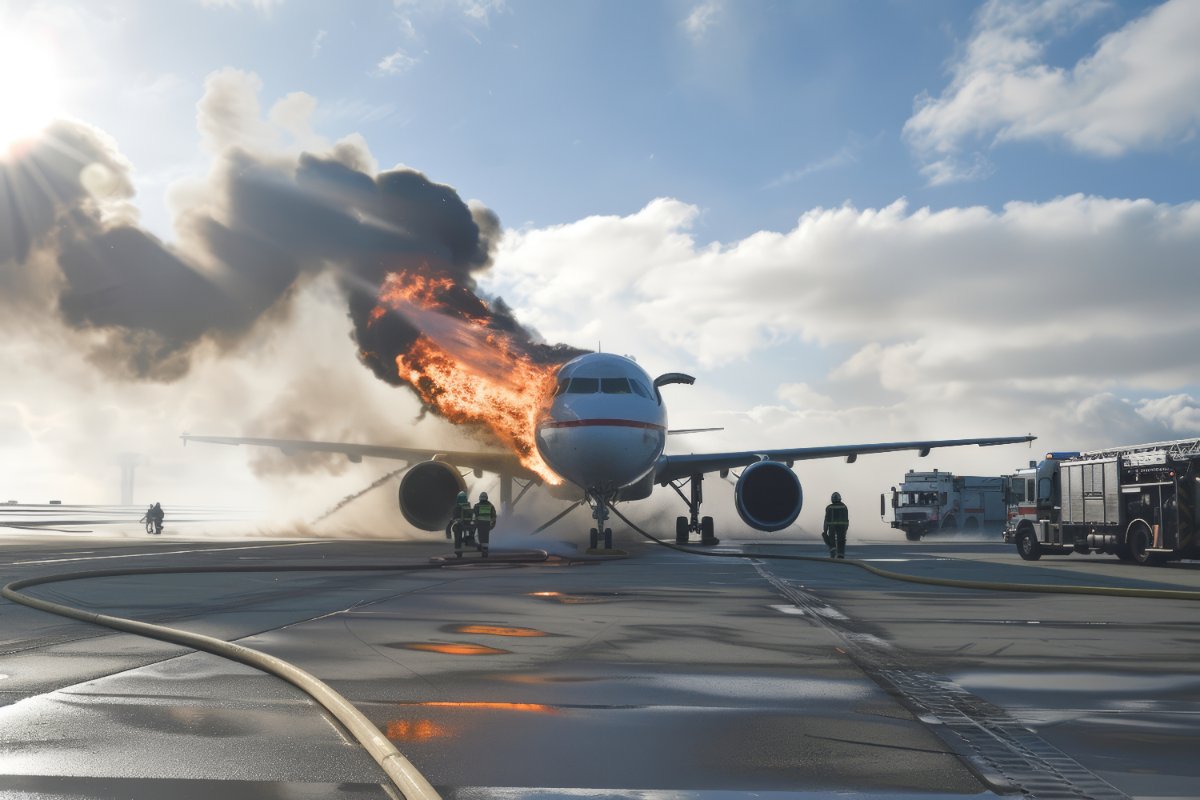 The investigation into the deadly Amazon cargo plane crash at Miami International Airport is beginning to reveal what happened inside the cockpit in the final minutes before the aircraft ran off the runway.
The early information raises serious questions.
On September 6, 21 Air Flight 7598, a Boeing 767 cargo plane operating for Amazon Air, overran Runway 30 after arriving in Miami from San Juan, Puerto Rico. The aircraft went through airport fencing and struck vehicles beyond the runway. Five people were killed, and five others were injured.
The National Transportation Safety Board (NTSB) is still investigating the crash, and it has not made a final determination of its cause. But information recovered from the cockpit voice recorder and flight data recorder shows an approach that was anything but routine.
The aircraft was too fast on approach
According to the NTSB’s September 9 investigative update, one pilot warned that the aircraft was moving too fast about a minute and 42 seconds before the cockpit recording ended. The pilot continued to raise concerns about excessive speed during the remainder of the approach, but the NTSB said there was not a consistent verbal response to those warnings.
Then came a series of automated alerts.
The cockpit recording captured two “sink rate” alerts. It also recorded the aircraft’s “too low terrain” warning four times, followed by another “too low terrain” warning seconds later. The pilots did not call for flaps to be set to 30 degrees until roughly 10 seconds before the aircraft touched down.
According to Captain Steeeve, who reviewed the NTSB information, he identified 11 points during the approach that he believes warranted a go-around. These are points when the altitude is low, and the aircraft is unstable and not in the correct position to land.
For a commercial aircraft to be stable on approach, it should be at or close to its final approach speed, on the proper vertical path and in the correct landing configuration by the stabilization altitude required for that approach and the operator’s procedures. Flight 7598 appears to have been struggling with those conditions well before it reached the runway.
The go-around may have come too late
A go-around is not an emergency maneuver. It is a normal safety procedure pilots use when an aircraft is not properly positioned or configured to land safely. Yet according to the NTSB timeline, the call for a go-around did not come until approximately 16 seconds after the aircraft had touched down.
Flight data shows the aircraft’s nose and right main landing gear touched down at a groundspeed of 158 knots. The brakes were applied, then released when the aircraft was still traveling about 120 knots as the throttles increased to a level consistent with go-around thrust.
Four seconds later, the throttles returned to idle, and the brakes were reapplied. The NTSB found no indication in the recorded data that the speed brakes or thrust reversers were deployed before the recording ended.
By that point, the aircraft was quickly running out of runway. So why did the flight continue toward landing after multiple signs that the approach was unstable? Was inadequate training a factor? Did weather or tailwinds contribute? Why wasn’t a go-around initiated earlier?
These are questions investigators will have to answer.
Wrongful death lawsuit filed after crash
The Amazon cargo plane crash has already resulted in litigation.
Yaraisi Santiso Morejon, whose husband, 53-year-old Yoel Rodriguez Naranjo, was one of the five people killed when the aircraft struck, filed a wrongful death lawsuit against Amazon, 21 Air, the pilots and other companies connected with the aircraft.
The lawsuit alleges the crash resulted from multiple failures, including pilot error, inadequate pilot training and the decision to continue a high-speed, tailwind-affected landing rather than execute a mandatory go-around. Those allegations have not yet been proven in court.
The NTSB investigation remains ongoing. Investigators are examining the pilots’ actions, the aircraft and its systems, as well as the circumstances surrounding the flight. Amazon has said it is cooperating with the investigation, and on September 13, the company paused operations with 21 Air following the crash.
Aviation accidents require a thorough investigation
Plane crashes rarely have simple explanations. Investigators may need to examine pilot training and decision-making, company safety policies, weather conditions, maintenance records, aircraft systems and other evidence before determining exactly what went wrong.
What is already clear in this case is that there were multiple warning signs during Flight 7598’s final approach. For the families of those killed and the people who were injured, understanding why those warnings did not result in an earlier go-around will be a critical part of determining responsibility.
Hickey Law Firm represents people who suffer catastrophic injuries and families who lose loved ones in aviation accidents. If you or a family member has been affected by an airplane crash, contact our Miami aviation accident lawyers for a free consultation.

Attorney John H. (Jack) Hickey and his team handle a wide range of cases, including but not limited to cruise ship accidents, admiralty and maritime accident cases, medical malpractice, wrongful death, premises liability, railroad accidents and car accidents. We represent victims from all over the nation, the world and the state of Florida.
Read more about how Jack Hickey can help you.