
Internal Injuries from Motorcycle Accidents
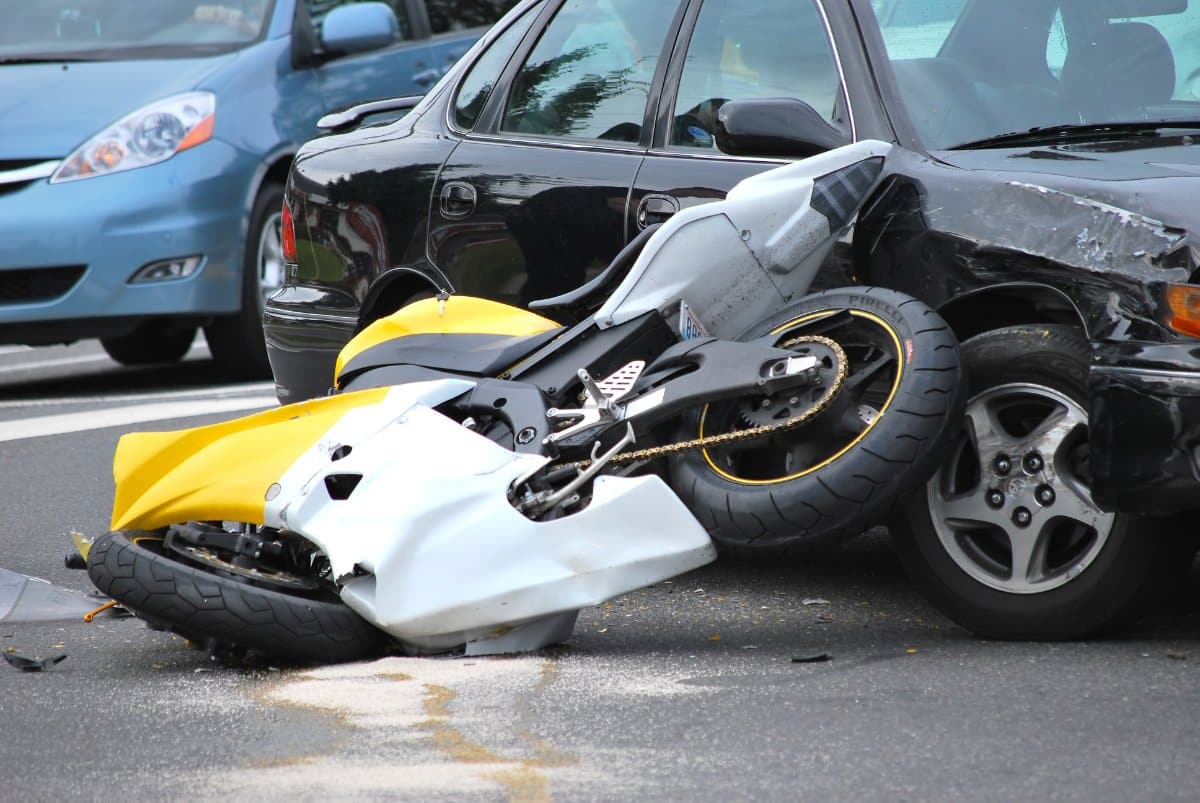
Common types of internal injuries after a motorcycle crash
Internal bleeding and hemorrhage
Internal bleeding means blood is escaping inside the body and remaining inside the body but not where it should be. You may not see anything from the outside. Hemorrhage is just a medical term for heavy or uncontrolled bleeding. This often comes from damage to solid organs (like your liver or spleen) or major blood vessels.
How an accident causes it: When you hit something hard or get thrown onto the ground, the force can tear organs or rupture blood vessels. Unlike a scratch or cut, you can’t see this kind of bleeding, but it can become life-threatening if not treated quickly.
Abdominal organ damage
Organs like the liver and spleen sit beneath the ribs, and the kidneys are partly protected by the lower ribs and spine, yet all remain vulnerable to blunt trauma. The pancreas and intestines have little bony protection.
How an accident causes it: A blunt impact with handlebars, the ground, or even your own helmet may crush or tear these organs.
Thoracic injuries – lungs, heart, major vessels
Thoracic injuries are those to the chest. These can include bruised lungs, air or blood trapped inside your chest, rips or tears in blood vessels (like the aorta), and even direct injury to your heart.
How an accident causes it: Slamming chest-first into a car, a curb, or handlebars can do significant damage without any apparent surface wounds. Broken ribs can puncture a lung. Sudden stops can jolt the heart or rip the biggest blood vessel in your body.
Subdural and epidural hematomas – brain injuries
These are types of head injuries where blood collects around the brain, between the skull and the lining of your brain tissue. Subdural hematomas involve bleeding under the dura, the biggest brain covering. With an epidural hematoma, the bleeding is just outside that layer.
How an accident causes it: Anything causing a sudden jolt or impact to the head, even if you’re wearing a helmet, can bruise or tear the brain’s tiny blood vessels. Blood starts to pool, building pressure. The brain is a soft body, much like gelatin or tofu, and moves around within fluid inside the skull. But the skull has sharp edges. The brain can move fast and actually crash into the sharp edges of the skull and get injured without the skull getting fractured or injured.
Motorcycle accidents can silently cause severe and sometimes life-threatening problems inside the body. If you or someone you know has been in a crash, make sure to watch out for any delayed pain or abnormal swelling, and get checked by a doctor as soon as possible.
Symptoms to watch out for that could point to internal injuries
If you’ve been in an accident, it’s hard to know if you have internal injuries, as they may not be obvious right away. However, there are some signs and symptoms you should look out for:
- Intense pain or tenderness in your abdomen or chest
- Blood in your urine, stool, or vomit
- Trouble breathing, shortness of breath, or unusual cough
- Persistent nausea or vomiting
- Skin that appears unusually pale, clammy, or cool
- Swelling in the abdomen or any area of impact
- Extreme thirst, dry mouth, or confusion
- Weak or rapid pulse
- Dizziness or fainting
- Bruising, especially around the torso
If you notice any of these signs after an accident, see a doctor right away.
Some of the signs or symptoms of a traumatic brain injury are:
- Loss of consciousness at the scene
- Dazed or confused within the first 48 hours of the crash
- Loss of memory of events at any time after or before and after the crash
- Nausea and/or vomiting at any time within 48 hours after the incident
- ER diagnoses a concussion
- Any problems with any one of the 5 senses at any time after the crash but especially within the first 48 hours afterwards
Building a Florida injury claim for internal injuries
If you need to file an injury claim, proving what really happened and how the accident affected your body can be more challenging than many expect. It takes the right proof to be presented in the right way.
Showing liability
You’ll need to prove someone else’s negligence caused the crash, making them liable. This is done by using the following evidence:
Police report
The police report is NOT admissible in trial in Florida. But it can help by giving us some facts and leads to find witnesses. The officers write down their first findings, document the location, and talk to everyone involved in the accident. They’ll mention if anyone was given a traffic citation, and may even write down who they believe was at fault (although the report often can’t be used as formal evidence). Which person got a ticket or citation also is NOT admissible in the civil trial. So that does not necessarily matter.
Crash reconstruction
Some accidents are complicated, with vehicles skidding or ending up at weird angles. Crash reconstruction professionals can step in and recreate the accident to give everyone a better idea of how it happened and who was responsible.
Witness statements
Bystanders sometimes see moments that those inside the crash may not remember. Your attorney will reach out to any witnesses to get their side of what happened and see if it backs up your version, which could be helpful for your claim.
Dash cam video
A lot of motorcycles and other vehicles have dash cams, and could have gotten the accident–and the moments leading up to it–on video. And sometimes buildings in the area have video. We can get that either from the buildings or sometimes from the state if there is a criminal prosecution of crimes related to the crash. We can sometimes get this footage and see what really happened.
Once you’re able to determine that someone else caused the accident, your lawyer can start proving your injuries.
Proving injuries
Insurance companies or a jury need more than your word that you’ve been injured. They need medical evidence that shows just how severely you’ve been hurt and what your recovery and life will look like in the future. We will help you put this information together by using the following information:
ER records
A trip to the hospital produces a lot of paperwork. ER doctors should document everything: pain, vital signs, scans, and treatment plans. This can explain what your injuries were right after the accident.
Imaging
Internal injuries generally aren’t visible on the surface. X-rays, MRIs, and ultrasounds capture images showing internal damage. These results provide evidence your legal team can rely on to show your injuries.
OR notes
If your injuries are so severe that you require surgery, doctors write operative notes. These describe everything that was repaired and possible ongoing issues.
Future care plan
When injuries mean a permanent change, like ongoing medical treatment or help at home, a life-care plan becomes important. This document breaks down estimated medical costs, prescriptions, and personal care. It paints a full picture for insurance adjusters and/or the jury to understand what daily challenges you currently face and will face in the future.
WHAT TO LOOK FOR IN A LAWYER.
Hire a lawyer who is Board Certified by The Florida Bar and by the National Board of Trial Advocacy. Those are two certifications, one for all of Florida and the other for the United States. They each have rigorous requirements of trial experience and recognition by lawyers and judges as trial lawyers.
Getting compensated after a Florida motorcycle accident means collecting as much evidence as possible to prove you were injured and that someone else should be held responsible.
When we represent injured motorcyclists in Florida, we know what it takes to build a successful claim. We’ve handled these cases for decades and have helped many victims recover compensation for their injuries and struggles. If you or a loved one was hurt, Hickey Law Firm is ready to guide you through the process. Call us today to schedule a free consultation.

Attorney John H. (Jack) Hickey and his team handle a wide range of cases, including but not limited to cruise ship accidents, admiralty and maritime accident cases, medical malpractice, wrongful death, premises liability, railroad accidents and car accidents. We represent victims from all over the nation, the world and the state of Florida.
Read more about how Jack Hickey can help you.