
Drowning Accidents in Commercial and Residential Pools in Florida: Safety Laws and Liability
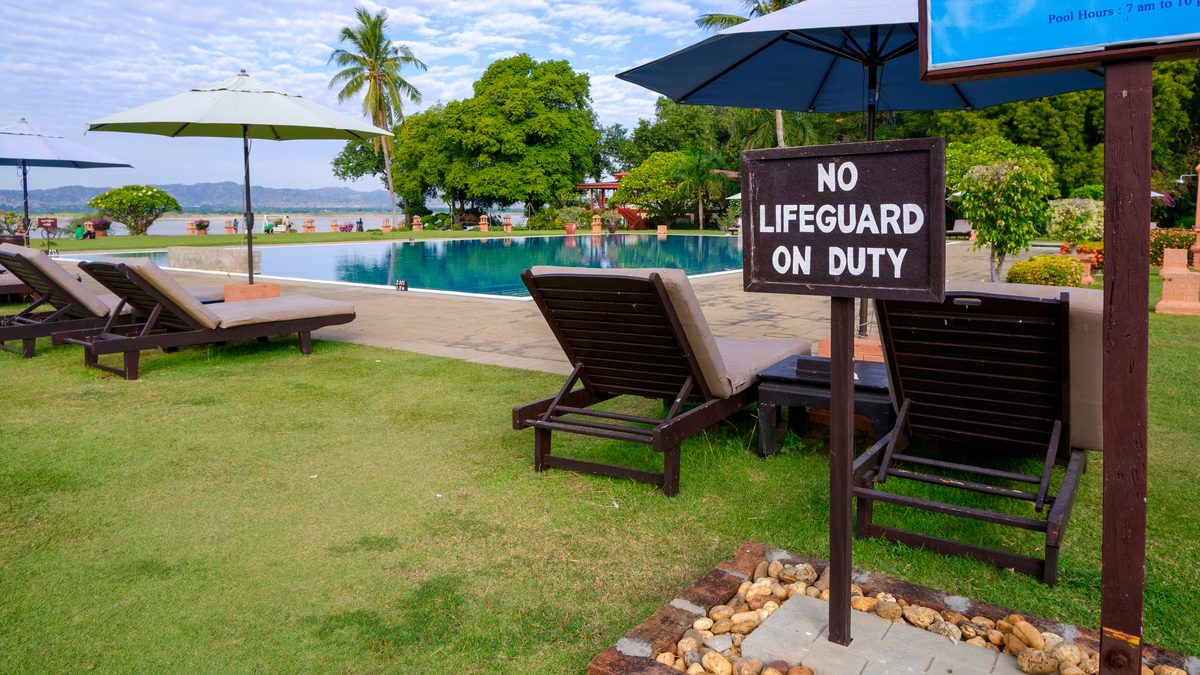 Drowning accidents can happen anywhere there is a swimming pool. And in Florida, pools are everywhere. Pool safety matters whether you’re swimming at an apartment or condo building, staying at a resort or hotel, or taking lessons at a school pool. It matters just as much when a neighbor invites your family over for a pool party.
To protect the public, Florida has laws specifically aimed at improving swimming pool safety. When pool owners and operators fail to follow them and other regulations, injured parties can hold them liable. For decades, the Hickey Law Firm has fought for people harmed by negligence. Keep reading to learn more about the responsibilities of pool owners in Florida, and how our drowning accident lawyers could help if you or someone you love was hurt.
What does Florida law say about swimming safety?
Improving swimming pool safety is a legislative priority in Florida.
According to the Residential Swimming Pool Safety Act, drowning is the leading cause of death in young children in the state and a significant cause of death for medically frail older adults. The law goes on to state that the healthcare costs, loss of productivity, legal, and administrative expenses caused by these accidents are “enormous.”
The Florida Department of Health reports that in 2025 alone, 444 Floridians died from unintentional drowning. Nonfatal drownings are also serious. According to the Centers for Disease Control and Prevention (CDC), lack of oxygen in these incidents can result in brain injuries and permanent disabilities.
What safety features are required for residential swimming pools?
The Residential Swimming Pool Safety Act aims to cut down on swimming pool accidents in Florida by requiring specific safety features for residential pools. Under the act, a residential pool is one that is on the premises of a “detached one-family or two-family dwelling or a one-family townhouse not more than three stories high.”
Since 2000, all newly constructed pools on properties of this type must meet at least one of the following requirements to pass inspection and receive a certificate of completion:
- The pool must be isolated from the home by an enclosure that meets statutory requirements (more on this below)
- The pool must have an approved safety cover
- All doors and windows providing direct access from the home to the pool must be equipped with an exit alarm (minimum sound pressure rating of 85 dB A at 10 feet)
- All doors providing direct access from the home to the pool must be equipped with a self-closing, self-latching device with a release mechanism placed no lower than 54 inches above the floor
- A swimming pool alarm that, when placed in the pool, sounds when it detects an accidental or unauthorized entrance into the water and is independently certified to ASTM Standard F2208
Residential pool owners who do not comply with the law may face penalties for a misdemeanor in the second degree, unless they equip their pool with one of the required features within 45 days after arrest or issuance of a summons. They must also take a drowning prevention education program, unless one is not offered in the 45-day time frame.
Barrier requirements
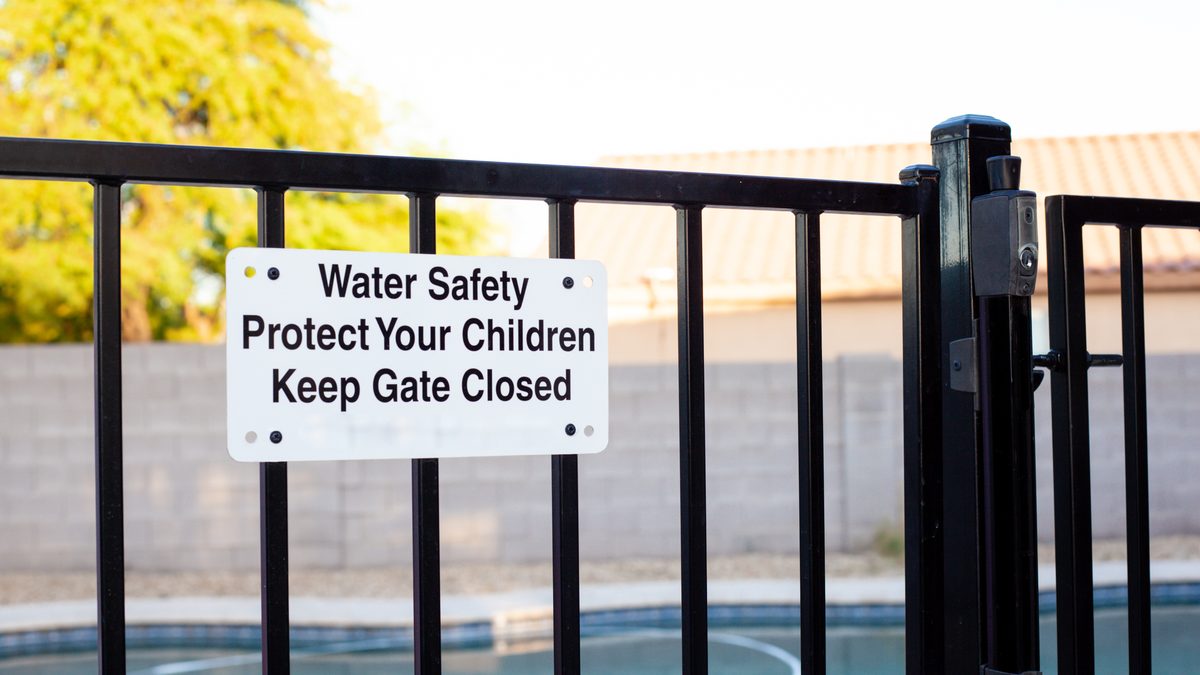 Residential swimming pool barriers, i.e., fencing, must meet certain requirements, which include but are not limited to:
- Being at least 4 feet high
- Not having any gaps, openings, or features that children could climb under, over, or through
- Being far enough away from the edge of the pool that someone who crossed the barrier would not immediately fall into the pool
- Having a gate that opens outward away from the pool and is equipped with self-closing and self-latching features
What safety standards are there for public pools?
Public pools in Florida have to comply with state laws, local and state ordinances, and the Florida Building Code. Owners and operators of public pools must also obtain permits and allow water quality inspections by the Florida Department of Health.
According to Florida Statutes Chapter 514, which outlines rules for public swimming and bathing facilities, public pools include (but are not limited to) those operated by cities, counties, churches, day care centers, spas, parks, hotels, motels, and apartment buildings. Under the law, public pools are required to have additional safety features, including anti-entrapment systems (to prevent drain entrapment).
What laws apply to ponds and other manmade bodies of water?
Manmade bodies of water, like canals, drainage systems, ponds, and retention ponds, generally do not have to be surrounded by a fence. However, when creating these bodies of water, property owners (and contractors) must follow applicable construction requirements. An unusual danger or condition constituting a trap may also create liability.
Who is liable for a drowning or near-drowning accident?
Swimming pool accidents fall under the legal umbrella of premises liability. Responsibility for a drowning or near-drowning may fall with the owner or operator of the residential or commercial pool. Depending on the property, this may include:
- A homeowner
- A private equity group (these groups own residential houses across the United States)
- An Airbnb or VRBO owner
- A real estate or property management company
- An apartment/condominium complex owner or management group
- The owner of a business, such as a hotel, motel, or spa
How to prove liability in a drowning accident case
Proving liability in a drowning accident can be complex. Often, pool owners will try to claim that patrons “swim at their own risk.” They may also allege that the fault rests (at least in part) on the injured party’s own negligence or the negligence of their parents, if the victim was a child. In these situations, cases often hinge on proving that there was a problem with the pool itself, such as a broken gate, insufficient fencing, or inadequate maintenance.
Our lawyers could help you establish that there was a safety issue with the pool by conducting a thorough investigation. We could visit the pool to inspect its condition, take photos and video, and review compliance with statutory, regulatory, and building code requirements. We can also obtain records regarding pool maintenance and inspections.
What happens when the fault is shared?
Florida follows a comparative fault system, outlined in Florida Statutes § 768.81.
The law states that when fault for an accident is shared by an injured party and is 50 percent or less, that party can seek compensation, but their financial recovery will be lessened by their degree of responsibility. So if you have $100,000 in damages but are 20 percent liable, you would receive $80,000. However, if you are more than 50 percent responsible, you cannot recover any compensation.
This is one reason why building a strong swimming pool accident case is vital. You need to be able to prove that the pool owner’s or operator’s negligence contributed to the accident, or you could end up paying some or all of the accident-related costs out of pocket. Our attorneys are here to help you do this, as quickly and efficiently as possible.
Contact Hickey Law Firm for legal guidance
When you work with Hickey Law Firm, you get a legal team committed to getting justice for you after your personal injury. If you or someone you love was in a drowning accident, give us a call. Our goal is to get the maximum compensation possible for you and your family, which may include medical bills, lost wages, and pain and suffering. If you lost a loved one, our guide to wrongful death lawsuits after a drowning accident in Florida explains how those claims work.
To learn more about how we can serve you, contact us today. We take cases on contingency, which means you pay no attorney’s fees or case costs unless we recover compensation.

Attorney John H. (Jack) Hickey and his team handle a wide range of cases, including but not limited to cruise ship accidents, admiralty and maritime accident cases, medical malpractice, wrongful death, premises liability, railroad accidents and car accidents. We represent victims from all over the nation, the world and the state of Florida.
Read more about how Jack Hickey can help you.