
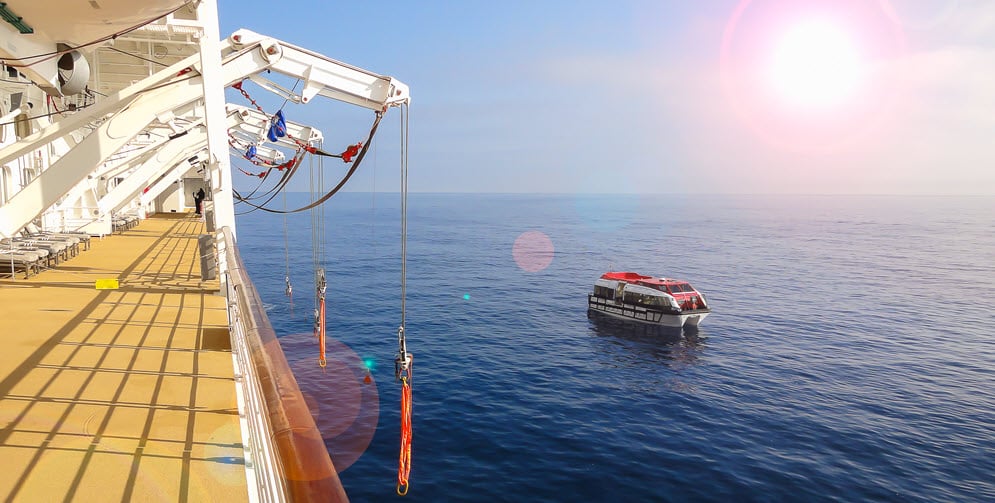
Tender Boat & Seamanship Failures
Helping injured passengers hold cruise lines accountable for seamanship failures
Tender boat injuries can happen when the cruise line does not assign enough personnel to assist passengers making that leap from the boat to a pier or platform or from a pier or platform to the tender boat. The other factors are if the crew is not trained, not paying attention, or misjudges the sea conditions. These cases are not handled like ordinary slip-and-fall cases on land.
Maritime law applies. The cruise lines control all of the documents, the personnel who work onboard the ship, and the accident scene. Our firm reviews everything that happened and takes the steps necessary to pursue justice and compensation on your behalf. Contact us today to schedule a free case evaluation.
WAS A LAWYER FOR THE CRUISE LINES. NOW A LAWYER FOR YOU ®
Frequently Asked Questions
- What is a cruise ship tender, and why is it risky?
- Cruise tender accidents are governed by maritime law
- What is “bad seamanship” in a tender boat context?
- When a cruise line or operator can be held liable
- Evidence that can make or break a tender accident case
- Critical deadlines in cruise injury cases
- Do you have a Florida-based maritime injury lawyer handling tender cases?
What is a cruise ship tender, and why is it risky?
A cruise ship tender is a small boat used to move passengers between the ship and shore when the ship cannot dock at the port. That transfer can look routine, but it is often a bit more complicated than it seems.
- Tenders are used where large ships cannot tie up at a pier
- Passengers may step from a boat which is bobbing up and down and in and out with the movement of waves, current, and wind. And there will be a gap, ever changing, between the boat and pier.
- Waves, currents, wind, and ship movement can change the transfer in seconds
- Crew instructions matter because passengers rely on them to board and exit safely
That combination of motion, timing, and coordination is what makes tender transfers risky. A short ride can become dangerous very quickly if the boat shifts or the transfer is handled poorly.
WHEN PEOPLE NEED A SPECIALIST IN LIFE CHANGING INJURIES,
PEOPLE CHOOSE HICKEY LAW FIRM.
Cruise tender accidents are governed by maritime law
A tender accident is usually not treated like an ordinary slip-and-fall on land. Maritime law examines how the tender was operated, how the crew handled the transfer, and whether the people running the boat exercised reasonable care under the conditions that day. That means the case often turns on seamanship. If the transfer was handled poorly, that can support a negligence claim under maritime law.
What is “bad seamanship” in a tender boat context?
Bad seamanship is a simple way of describing unsafe boat handling. It means the crew failed to manage the tender safely, given the water, weather, and passenger movements. These are not just small mistakes. They are the kinds of failures that can directly cause a fall, a collision, or a hard impact during transfer, leading to serious injuries.
Common causes of tender boat injuries
Some injuries happen while passengers are getting on or off the tender. Others happen because the crew handled the boat poorly once everyone was aboard. The details matter because they show where the breakdown happened. Here's how and when these injuries often occur:
Tender embarkation and disembarkation errors
Boarding and leaving the tender is often the most vulnerable part of the trip. A small gap, a moving platform, or one sudden shift can throw a passenger off balance in an instant. When that happens, the issue may be the transfer itself. Examples include:
- Misaligned platforms
- Sudden movement during transfer
- Lack of assistance from the crew
- Unsafe step height or gap
If the boarding point was not stable or the crew did not help when help was needed, the transfer may have been unsafe, even if the passenger was trying to be careful.
Crew handling mistakes
The crew’s job is not just to open a gate and point people in the right direction. They have to watch the line, give clear instructions, and make sure passengers are not put in a dangerous position. When that process breaks down, people can get hurt even before the boat leaves the dock. Examples that can lead to injuries include:
- Failure to guide passengers properly
- Inadequate staffing during boarding
- Poor coordination between crew members
- Lack of training or supervision
When the crew is disorganized, passengers often end up in the wrong place at the wrong time. That can turn a normal transfer into a serious injury case.
Navigation and docking failures
A tender also has to be driven and docked with care. A rough approach or a bad stop can cause passengers to lose balance even if they were standing still. These problems often point to how the operator handled the vessel, not just to the final impact. Examples include:
- Rough or unsafe docking maneuvers
- Failure to account for currents or waves
- Collisions with the dock or ship
- Sudden stops or turns
If the boat was brought in too fast or docked carelessly, the crew may have created the hazard that caused the injury.
Misjudging weather and sea conditions
Not every tender should leave the dock when the water is rough. The crew has to assess the sea state, wind, and wave impact before deciding to proceed. If they ignore those conditions, the transfer may be unsafe, no matter how careful the passengers are.
- Operating in unsafe conditions
- Failure to delay tender operations
- Underestimating wave impact
When the crew presses ahead in bad conditions, injuries may result.
When a cruise line or operator can be held liable
To bring a claim, an injured passenger must generally show four things: duty, breach, causation, and damages. In a tender case, those parts connect the operator’s conduct to the injury and the losses that followed.
Duty of reasonable care under maritime law
Cruise operators must act as reasonably careful operators would under similar conditions. That includes accounting for the vessel's movement, the water, the crowd, and the boarding process. The law does not expect perfection, but it does expect safe judgment and ordinary precautions.
Breach through poor seamanship
A breach happens when the crew does not handle the tender safely. That can mean poor positioning, rushing passengers, failing to stabilize the vessel, or giving unclear instructions. It can also mean ignoring wind, waves, or other conditions that made the transfer more dangerous. In a tender case, those are operational failures, not simple bad luck.
Causation
Causation means the crew’s mistake must have led to the injury. If the tender shifted during boarding and a passenger fell, that link may be clear. If the injury was caused by something unrelated, the claim becomes harder to prove. Witness statements, medical records, and the incident report often help show what actually caused the harm.
Damages
Damages are the losses caused by the accident. That can include medical bills, lost income, future treatment, and pain and suffering. Without provable damages, there is no personal injury claim.
Evidence that can make or break a tender accident case
Most of the proof in these cases is in the cruise line’s hands, which is why time matters. The right records can show what the crew knew, what happened during the transfer, and whether the accident could have been prevented. Examples of important evidence include:
- Crew logs and incident reports can show the sequence of events and who was on duty
- Passenger witness statements can confirm how the transfer looked from the boat or dock
- Surveillance footage may capture the fall, the boarding process, or the crew’s response
- Weather and sea condition data can show whether the trip should have been delayed
- Training and safety protocols can show what the crew was supposed to do
- Expert maritime analysis can explain whether the operator met accepted seamanship standards
These records are often controlled by the cruise line or tender operator, so they can be lost, overwritten, or withheld if no one acts quickly. If you were hurt during a tender transfer, speak with a Florida cruise injury lawyer as soon as possible so the evidence can be preserved.
MAKING OUR WORLD SAFER ONE CASE AT A TIME ®
Critical deadlines in cruise injury cases
Cruise injury claims often come with contract deadlines that are much shorter than most people expect. Many cruise tickets require written notice within 6 months and a lawsuit within 1 year. Most of these cases have to be filed in federal court in Miami, Florida. Missing one of these deadlines can end the claim before it ever gets heard.
Do you have a Florida-based maritime injury lawyer handling tender cases?
Yes. Our firm handles maritime injury cases all over the United States. Our lawyers are admitted in Florida, Washington State, and Illinois. And we have appeared in cases in California and New York. We understand the deadlines, the evidence issues, and the court rules that can affect these claims.
Hickey Law Firm locations:
804 South Douglas Road, Suite 373, Coral Gables, FL 33134
12150 SW 128th Ct, Suite 225, Miami, FL 33186
Contact us today to schedule your free consultation.
Contact Hickey Law Firm to schedule a free consultation with a maritime law attorney
If you were hurt during a tender boat transfer, do not assume there's nothing that can be done. Poor seamanship can involve unsafe boarding, bad timing, weak crowd control, or a failure to respond to changing conditions. Those details matter when you are trying to prove fault and pursue compensation.
We can review the cruise line’s records, witness statements, and medical evidence to see where the breakdown happened. If you were injured on a tender boat or while boarding one, contact our team today to schedule a free consultation.